When planning a modern lighting scheme for your home or commercial space, you've likely come across two distinct options: flexible LED strip lights and rigid linear LED lighting. While flexible strips are perfect for intricate curves and tight spaces, rigid linear fixtures have emerged as the go-to choice for clean, architectural illumination that defines contemporary interiors.
This comprehensive guide will explore everything you need to know about linear LED lighting—what it is, where to use it, how to choose the right fixture, and how it compares to flexible strip lights. By the end, you'll have a clear understanding of why linear LED lighting might be the perfect solution for your next project.
Linear LED lighting refers to long, narrow light fixtures that use LED technology housed in rigid aluminum or plastic enclosures. Unlike flexible LED strips that can bend around corners, linear fixtures maintain a fixed shape and deliver consistent, shadow-free illumination across their entire length.
A Line light is a long strip lighting fixture that uses an LED light source and has the characteristics of high brightness, energy saving, environmental protection, and long life. Its design is simple and has a strong sense of lines, which is suitable for modern style decoration needs.
These fixtures are available in various lengths, beam angles, and color temperatures, making them suitable for everything from under-cabinet kitchen lighting to large-scale commercial installations.
One of the primary advantages of linear LED fixtures is their ability to produce consistent, even illumination without hotspots or flickering. The rigid housing often incorporates diffusers that eliminate the "dotted" appearance common with bare LED strips, creating a smooth, professional finish.
LED-based linear light fixtures consume up to 80% less energy than fluorescent tubes, produce less heat, and have a much longer lifespan—often exceeding 50,000 hours. This translates to significantly lower electricity bills and reduced maintenance costs over time.
The clean lines and minimalist design of linear lighting fixtures complement contemporary architecture perfectly. Whether surface-mounted, recessed, or suspended, these fixtures add a sophisticated touch to any space without drawing attention to themselves.
Unlike flexible strips that can be damaged by repeated bending or exposure to harsh conditions, rigid linear fixtures are built to last. Their aluminum housings provide excellent heat dissipation, protecting the LEDs and extending their operational life.
Linear fixtures can be surface-mounted, recessed into ceilings or walls, suspended as pendant lights, or even integrated into custom millwork. This flexibility allows designers to incorporate them seamlessly into virtually any architectural setting.
Perhaps the most common residential application, linear fixtures mounted under upper cabinets provide excellent task lighting for countertops. The even distribution eliminates shadows where you need to chop vegetables or read recipes.
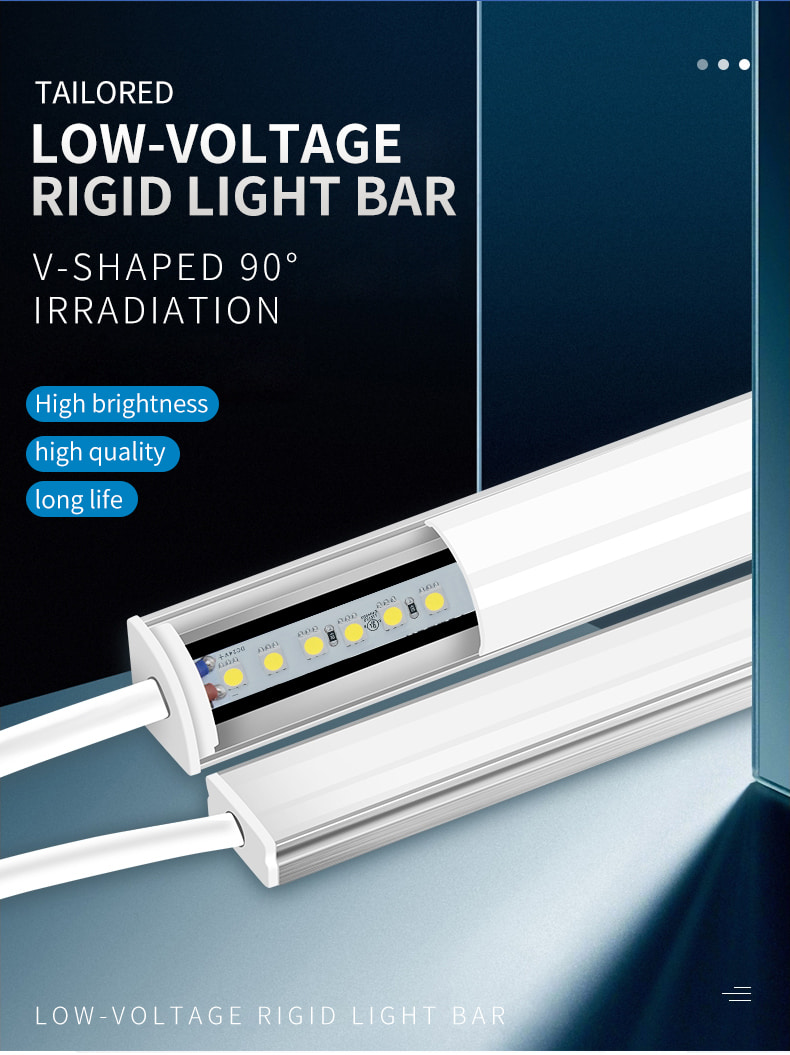
Retail environments benefit enormously from linear lighting. Our Low Voltage High Brightness 90°V Shape Led Rigid Light Bar is designed for precise lighting, featuring a 90° V-shaped beam angle to ensure effective lighting in corners, display shelves, cabinets, and other indoor applications with limited space.
Recessed linear fixtures installed in ceiling coves create a floating effect, washing walls with soft, indirect light that makes rooms feel larger and more open.
Linear lighting is the standard for modern office environments, providing glare-free illumination that reduces eye strain and improves productivity. The fixtures can be suspended or recessed to create a clean, professional atmosphere.
Wall-mounted or recessed linear fixtures along staircases and hallways provide both safety and style, guiding occupants while adding architectural interest.
Understanding the differences between these two lighting types is crucial for making the right decision. Here's a detailed comparison:
| Feature | Flexible LED Strip | Rigid LED Light Bar |
|---|---|---|
| Flexibility | Can bend around corners and curves | Fixed shape, cannot be bent |
| Installation | Adhesive backing for easy mounting | Requires mounting brackets or screws |
| Cutting | Can be cut to custom lengths at designated points | Typically sold in fixed lengths |
| Heat Dissipation | Limited; relies on PCB and optional channels | Excellent; aluminum housing acts as heat sink |
| Durability | Moderate; can be damaged by sharp bends | High; robust construction withstands handling |
| Light Uniformity | May show individual LEDs without diffuser | Consistent, even illumination with built-in diffuser |
| Best For | Curved surfaces, tight spaces, creative installations | Straight runs, task lighting, commercial applications |
Choose flexible strips when your installation requires navigating curves, corners, or irregular shapes. They're ideal for:
Cove lighting around curved ceilings
Backlighting for signs or displays
Accent lighting on furniture with rounded edges
Applications where cutting to exact lengths is essential
Choose rigid linear fixtures when you need:
Consistent, shadow-free illumination for task lighting
Durability for high-traffic or commercial environments
Professional appearance with clean, straight lines
Better heat management for extended operation
Integration into millwork or architectural features
A rigid light bar is easier to fix, and it's more convenient to process and install; the disadvantage is that it cannot be bent and is not suitable for irregular areas.
Determine the exact length you need for your installation. While rigid bars come in standard lengths (often 1-4 feet), some manufacturers offer custom sizing. For under-cabinet applications, measure the space carefully and choose fixtures that fit without gaps.
Beam angle determines how the light spreads. For task lighting like under-cabinet or display illumination, a narrower beam angle (such as the 90° V-shape) focuses light precisely where it's needed. For ambient lighting, wider angles (120° or more) create softer, more diffuse illumination.
Choose the right Kelvin rating for your space:
2700K – 3000K: Warm white – ideal for living rooms, bedrooms, and cozy spaces
3500K – 4500K: Neutral white – perfect for kitchens, bathrooms, and offices
5000K – 6500K: Cool white – best for task lighting, retail displays, and workshops
Calculate the total wattage needed based on the length of your installation and desired brightness level. Always include a 20% buffer to prevent overloading the power supply.
If you want adjustable brightness, ensure both the fixture and the driver are dimmable. Many linear fixtures are compatible with TRIAC, 0-10V, or DALI dimming systems.
The lighting industry continues to evolve, and several key trends are shaping the future of linear LED lighting:
Designers are moving away from evenly spaced brightness toward purposeful placement. Continuous LED strip lighting installed under cabinets, in bulkheads, or along architectural details creates uninterrupted light with fewer shadows and longer lifespan.
Modern linear lighting increasingly features high CRI values (90+), allowing colors to appear more accurate and natural. This is particularly important in retail, kitchen, and bathroom applications where color distinction matters.
Linear lighting systems are becoming increasingly connected, with compatibility for smart home platforms, scheduling, and voice control.
Toe-kick lighting along base cabinets adds a subtle ambient layer that makes kitchens feel larger and more modern. The 2026 trend is continuous LED tape in aluminum channels with frosted diffuser covers, creating a clean line of light with no visible hot spots.
If your installation involves long, straight runs without curves, a rigid linear fixture will provide better light quality and durability than a flexible strip.
Using a fixture with too wide a beam angle for task lighting can waste light and reduce effectiveness. Match the beam angle to the application.
While linear fixtures handle heat better than flexible strips, ensure adequate ventilation, especially for recessed or enclosed installations.
Not all linear fixtures are dimmable. If you want adjustable brightness, verify compatibility with your chosen dimming system before purchasing.
Plan your layout before purchasing. Measure carefully and account for power supply placement.
Use appropriate mounting hardware. Most rigid bars come with mounting brackets; ensure they're secured to solid surfaces.
Test before final mounting. Connect everything temporarily to verify operation and light quality.
Consider aluminum channels. Even with rigid fixtures, channels can provide additional heat dissipation and a cleaner look.
Hide wiring when possible. For a truly professional appearance, route wires through walls, cabinets, or behind trim.
Linear LED lighting represents the perfect intersection of form and function for modern interiors. Whether you're illuminating kitchen countertops, showcasing products in a retail display, or adding architectural interest to a commercial space, a Line light offers the clean lines, superior light quality, and energy efficiency that today's projects demand.
At Gming LED, we offer a complete range of flexible LED strip lights, linear LED lighting fixtures, and rigid LED light bars – all backed by factory-direct quality and competitive pricing. Browse our collections, and if you're not sure which solution fits your project, our team is just a message away.
Need help planning your installation or choosing the right fixtures? Contact us with your project specifications – we're here to help you get it right the first time.

 Our Store


 IPv6 network supported
 English
 français
 español
 العربية
 한국의
한국의